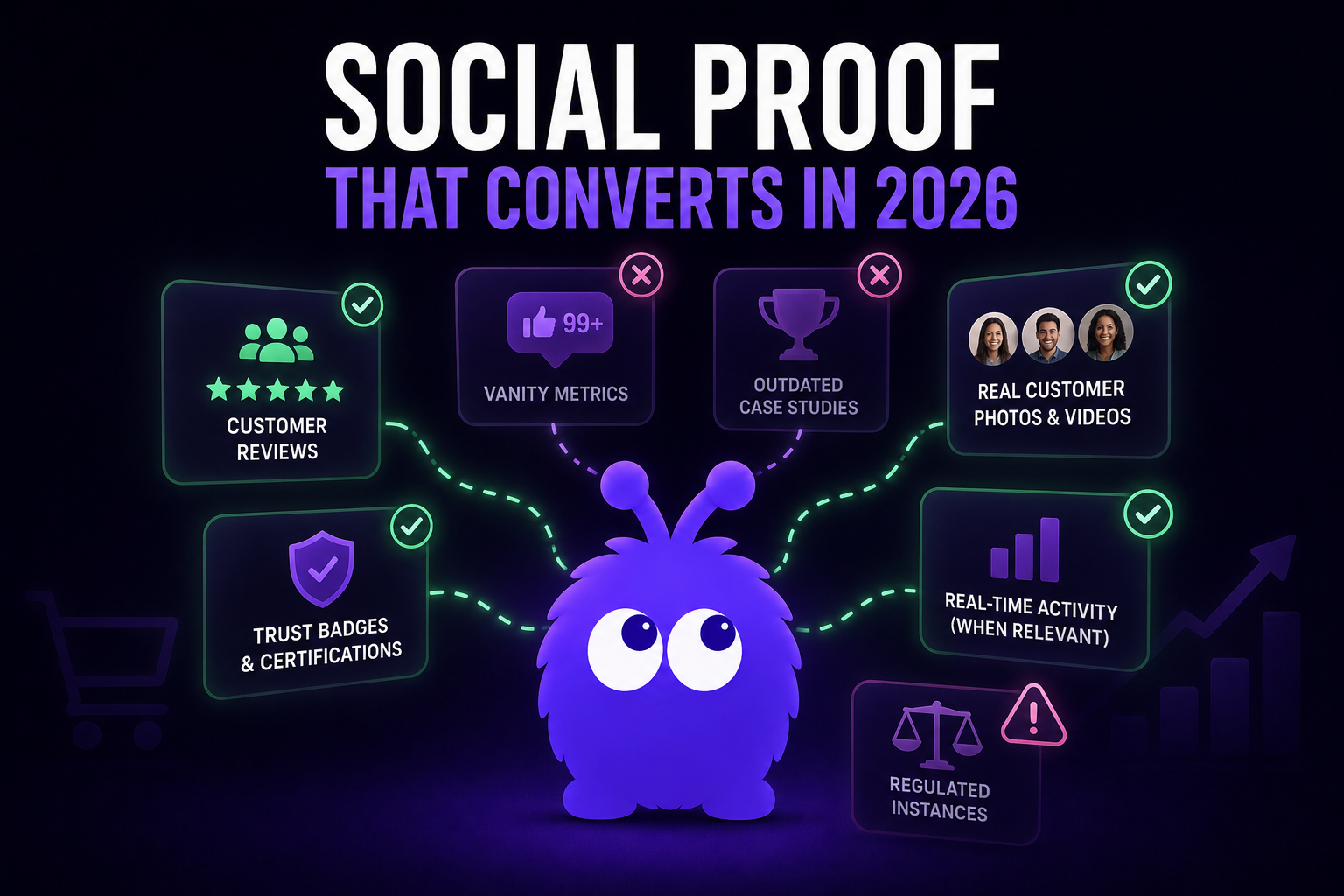
Few CRO tactics are recommended as often — or applied as carelessly — as social proof. The 2018 advice treated every form of it as a guaranteed win. The current picture is more mixed: some forms still produce reliable lift, others have worn down into background noise, and a handful are now regulated. Here are 19 concrete examples, grouped by how well they still work.
The workhorses: proof that reliably lifts conversion
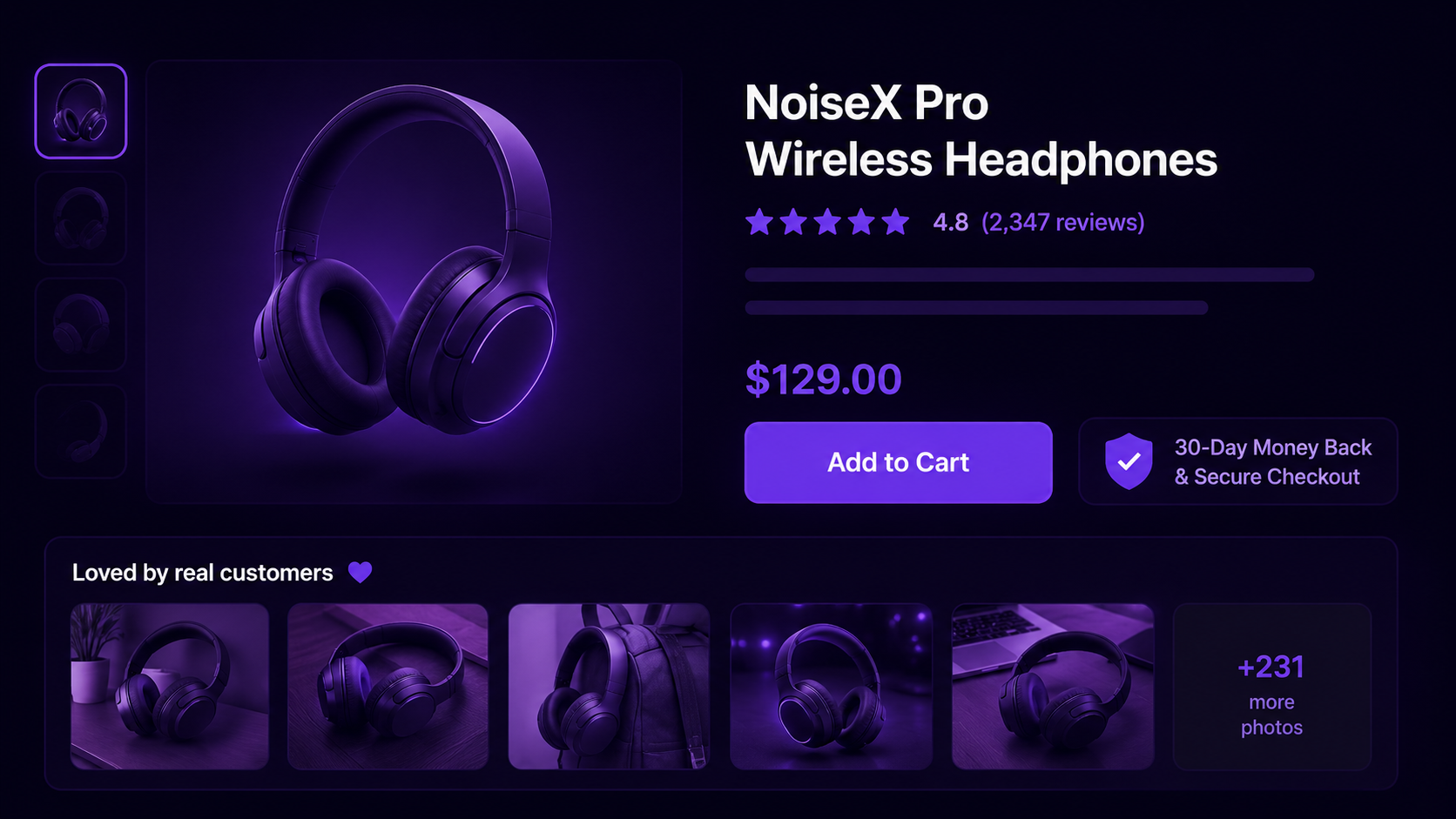
- Star ratings with review count. The single most trusted element. Show the count next to the average — "4.4 (1,247 reviews)" beats "4.4 stars" — because the count is the credibility.
- Rating distribution bars. The 5-to-1-star histogram signals nothing is hidden. A real distribution has a tail.
- Long-form text reviews. Especially with verified-purchase labels. Detailed reviews read as genuine in a way star counts alone cannot.
- Filterable reviews. Let shoppers filter by size bought, skin type, use case. Relevance turns proof into an answer.
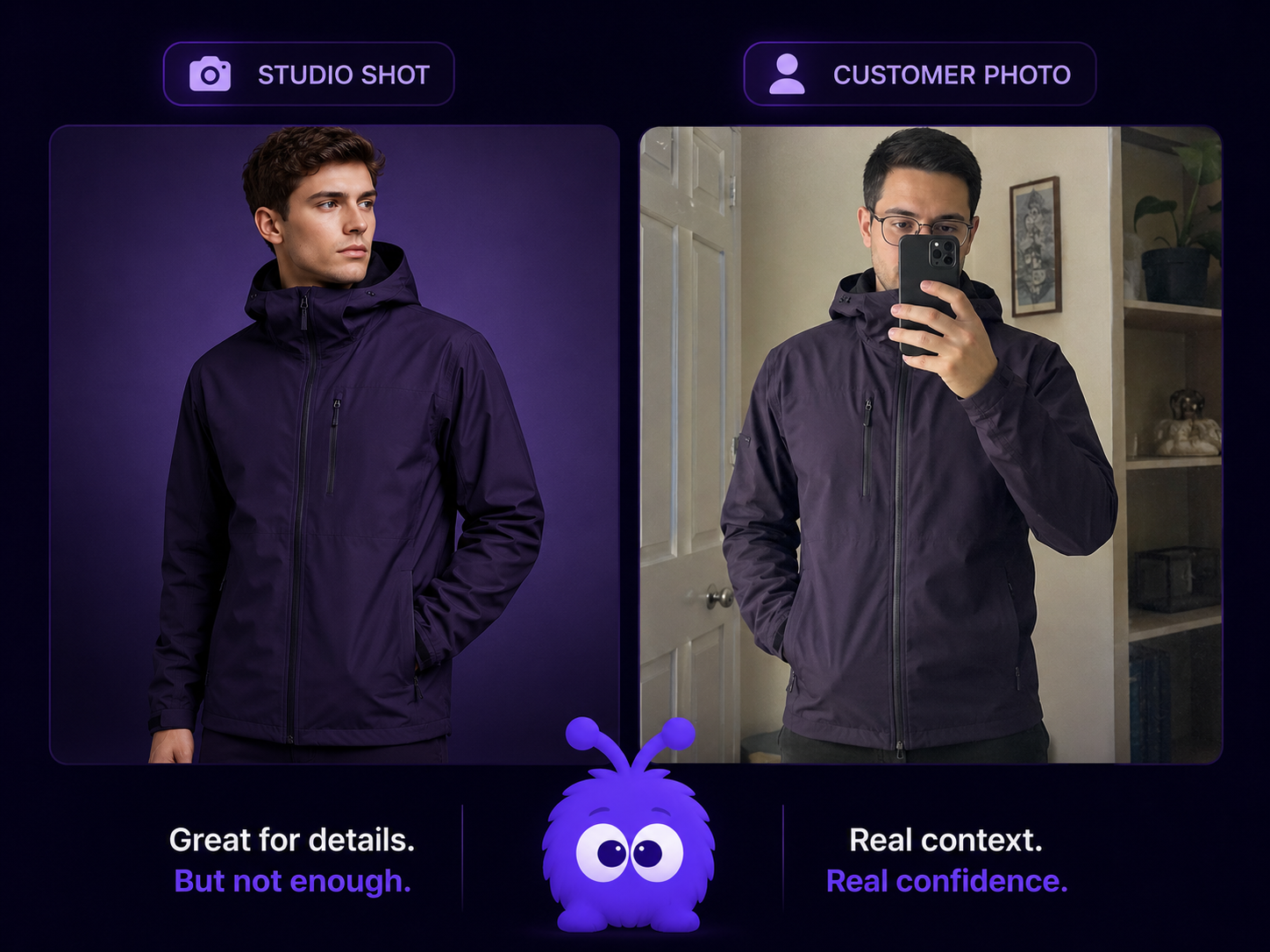
- UGC photo galleries. Customer photos answer the question studio photography cannot: how will this look on a real body, in a real room. Strongest on apparel and home, where fit-and-styling anxiety lives.
- UGC video. Same mechanism as photos, higher effort, higher payoff on products with movement or scale questions.
- Review snippets in search results. Product review schema puts the stars in the SERP before the visitor ever lands.
- Q&A sections. Answered questions from real buyers double as long-tail SEO and pre-sale objection handling.
The situational: proof that works when it's specific
- Customer count claims. "12,000 stores use this" works when the number is real and specific; "trusted by thousands" is wallpaper.
- Named customer logos. Powerful for B2B and premium DTC — if the names are recognizable and permission is real.
- Press mentions. "As seen in" bars work when the coverage actually exists and links out.
- Expert endorsements. A dermatologist for skincare, a mechanic for tools — with the material connection disclosed.
- Third-party certifications. B-Corp, GOTS, UL — verifiable badges that link to the certifier.
- Best-seller and "most popular" badges. Honest rank data from your own catalog, refreshed on a schedule.
- Case studies and testimonials. Named, specific, with numbers the customer actually reported.
- Community size. Subscriber or member counts, when the community is real and visible.
The decayed and the banned
- Recent-purchase tickers. "John from Ohio just bought…" — novel in 2018, pattern-matched as theater now. By this point the imaginary shopper in those tickers has bought more products across more unrelated stores than any human could manage in a lifetime. Skip it.
- "X people viewing now" counters. Same decay curve, plus frequent fabrication — which moves it from useless to unlawful.
- Fabricated reviews. Not decayed — banned. The FTC's final rule on fake reviews and testimonials (effective 2024) prohibits fabricated or AI-generated reviews from non-customers, review suppression, and undisclosed paid endorsements, with civil penalties per violation. UK and EU enforcement guidance similarly names fabricated scarcity and activity counters as deceptive design.
The pattern across all 19: forms that signal genuine, third-party, verifiable experience still work. Forms that visitors have learned to recognize as theater have decayed. Forms that cross into fabrication are now a compliance liability, not a CRO trade-off.
Getting the placement right
Placement mirrors the visitor's question order:
- Top of the PDP (under the title): star rating + count — answers "is this respected?"
- Middle (after description): UGC gallery, detailed reviews — answers "how does it look in real life?"
- At the CTA: trust badges, payment icons, return promise — answers "is this safe to buy?"
The product page optimization post covers how the reviews row fits among the other thirteen elements.
Social proof in chat
One surface worth a note: proof delivered conversationally. An in-session agent that says "150 customers bought this in the last month — want to see what they said?" and links the reviews makes the proof relevant at the moment of hesitation. Two rules carry over: photos belong in galleries, not chat bubbles; and chat must only surface real events from the order stream — a fabricated ticker read aloud by a mascot is still a fabricated ticker.
What to do, in order
- Lead with star ratings + count + distribution. Most reliable element, zero legal exposure.
- If a product has few reviews, seed the pipeline first — a post-purchase email flow (our post-purchase survey builder helps) beats anything decorative.
- Invest in UGC submission and moderation. The biggest durable lift on apparel and home lives there, and it compounds.
- Drop the tickers and counters. They don't lift conversion, they erode trust, and the fabricated versions invite enforcement.
The shorthand: real social proof works, fabricated doesn't, and the regulatory line has moved to make the shortcut more expensive than the work.
Further reading
- GuideThe CRO playbookWhere social proof fits in the broader CRO context.
- BlogProduct page optimizationWhere the reviews row sits on the PDP.
- GuideThe proactive chat playbookSurfacing proof at the moment of hesitation.
- ToolPost-purchase survey builderSeed the review pipeline that powers the star rating.
Last updated July 6, 2026.